The Deepfake Briefing
The Voice Cloning Scam Just Got a Senator's Attention, and That Tells Us Everything
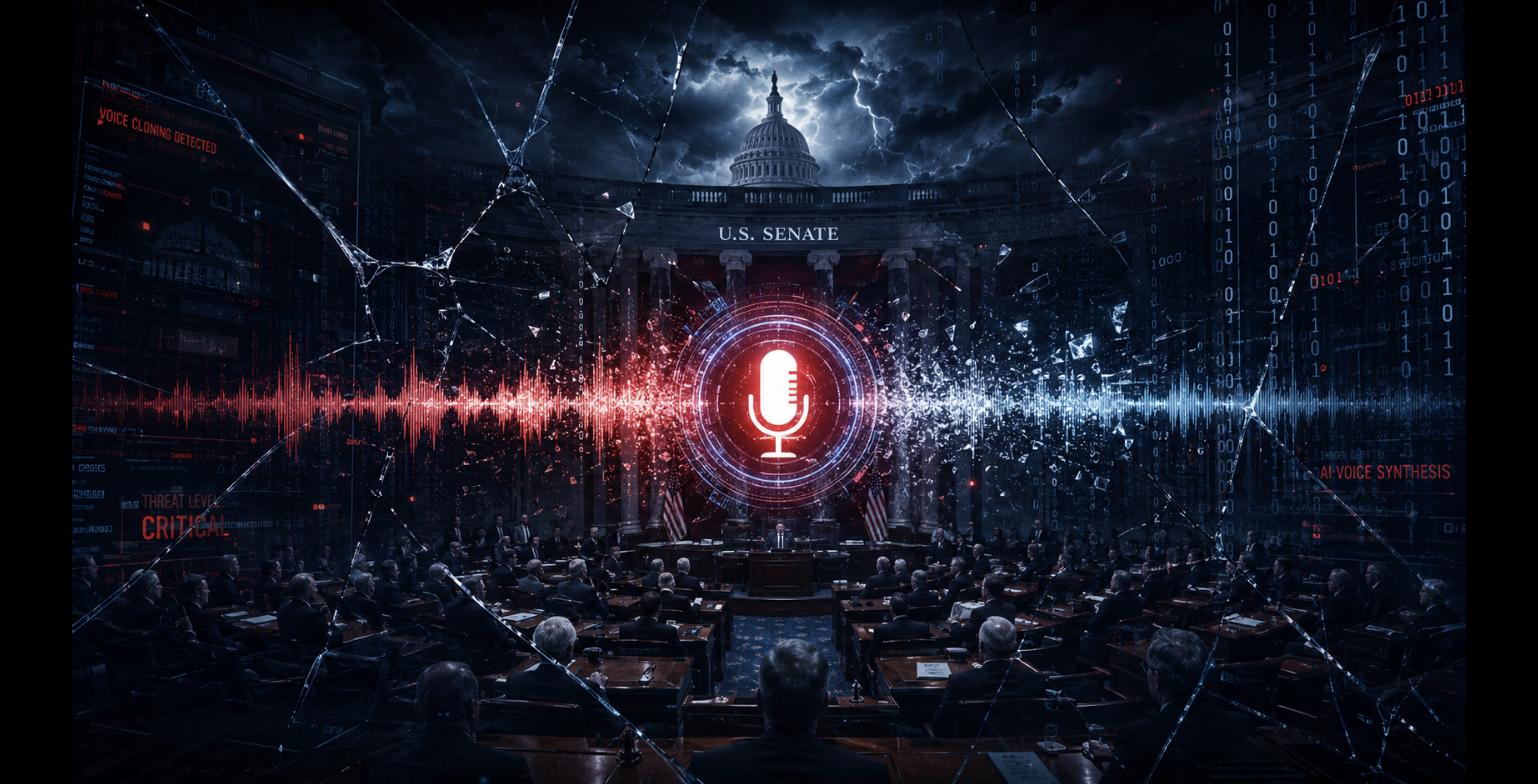
On April 16, Senator Maggie Hassan of New Hampshire mailed four letters that almost no one outside Washington noticed. They went to ElevenLabs, LOVO, Speechify, and VEED, the four companies most closely associated with high quality AI voice cloning. The letters were not a press stunt. They asked specific, technical questions about consent verification, watermarking, fraud monitoring, and law enforcement reporting. According to Axios, Hassan gave the companies a hard deadline to respond.
That same week, ScamWatchHQ reported that one in ten Americans now says they or someone in their household has been targeted by a voice cloning scam. Read that again. One in ten. Not a 2030 projection. Right now.
This is the moment the voice cloning scam stopped being a tech curiosity and became a national consumer protection problem.
The FBI's Internet Crime Complaint Center logged $893 million in AI related scam losses in 2025 across more than 22,000 complaints, according to figures cited in the Senator's letter to ElevenLabs. Those are reported cases. Anyone who has worked in fraud will tell you the real number is multiples higher. People are embarrassed. People are unsure who to call. People do not always know they were scammed at all.
Deloitte's Center for Financial Services projects AI enabled fraud losses in the United States could reach $40 billion by 2027, up from $12.3 billion in 2023. That is a thirty two percent compound annual growth rate. To put it plainly, the scam is winning the arms race.
Behind every one of those numbers is a story. A grandparent who heard a granddaughter sobbing on the phone, kidnapped, please send the bail money. A small business owner who heard the boss request a wire transfer in the CEO's exact cadence. A finance employee at the engineering firm Arup who joined a video call with what looked and sounded like the company's CFO and ended up sending $25.6 million across fifteen transactions. That last one was reported widely and is now the textbook case for how convincing a synthetic identity has become.
Senators write a lot of letters. This one is different because it asks the right questions.
Hassan asked the companies whether they actually monitor for scam related uses, whether they verify consent before cloning a voice, whether they detect attempts to imitate public figures and minors, whether they watermark their outputs, whether they preserve provenance information, and whether they report bad actors to law enforcement. According to coverage from the Joint Economic Committee, she also wants to know what the companies are doing about voices used to impersonate family members in extortion schemes.
These are exactly the controls the security community has been calling for. They are also exactly the controls most providers have not implemented at scale. Watermarking remains inconsistent. Consent verification often relies on a checkbox. Fraud monitoring is still treated as a nice to have rather than a baseline.
Hassan's letter is not happening in a vacuum. The bipartisan NO FAKES Act, the DEEPFAKES Accountability Act, and the proposed AI Fraud Accountability Act of 2026 are all moving through Congress in some form. Forty six states have already passed legislation targeting AI generated media. The Federal Trade Commission, according to CyberScoop, is preparing to expand its AI enforcement portfolio to include voice cloning.
Translation. The regulatory tide is coming in. The question is whether protection for ordinary people gets built before the next wave of scams or after.
Here is the uncomfortable truth. Even when the laws pass, even when the watermarks are universal, even when every reputable provider verifies consent, the harm has already happened to a lot of people. And the criminals who matter most do not use the reputable providers. They use the open source ones, the leaked models, the ones running on a laptop in a basement.
That is the gap. That is the space where the voice cloning scam will continue to operate even as the legitimate market gets more responsible. And it is the gap that no current insurance product, fraud alert service, or government agency is fully covering.
That is why we started the InsureMyAvatar community, a place for people who see what is coming and want to help shape what protection looks like before the worst of it arrives. We are not selling a policy today. We are building the conversation, the network, and the partnerships that will make real protection possible. We work with technology builders, insurance leaders, legal experts, and ordinary people who have been hit by these scams and never want anyone else to go through it.
If you are reading this and thinking it sounds personal, that is because it is. A cloned voice does not feel like data theft. It feels like a violation. The first step toward better protection is knowing where you stand right now and joining the people working on what comes next.
The senators are paying attention. The legislation is moving. The companies are being asked tough questions. The piece that still has to be built is the protection layer for the rest of us, and that is the work the InsureMyAvatar community is here for.
Take our free risk assessment at insuremyavatar.com and sign up for weekly digital safety updates, news, and tips you need to know.
The threats, the laws, and how to stay protected, in your inbox each week.